Getting cited by AI means putting a self-contained, verifiable answer in the first 150 words of a page, backing it with an original statistic or independent corroboration, and exposing it through schema.org markup and open crawler access. Skip any one of those three, and retrieval systems have less reason to trust or lift your content. Get all three right, and you’re building the signals that GPTBot, PerplexityBot, and Google’s AI Overviews are actually built to find.
TL;DR:
- Pages must have a clear, self-contained answer capsule in the first 150 to 200 words, including a verifiable statistic or source, to be reliably cited by AI systems.
- AI retrieval models prioritize structured, accessible content over backlinks, meaning authoritative third-party verification is more influential than link volume.
- Technical setup, such as allowing AI crawlers, proper schema markup, and avoiding hidden facts in images or JavaScript, is essential for content to be extractable and quotable.
- Building for citations requires ongoing outreach and original data publication to trusted industry sources, not just on-page optimization.
- Regular monitoring through manual prompt testing and tracking referral traffic helps measure and improve the likelihood of content being cited by AI.
Table of Contents
- How AI Engines Decide What to Cite
- How Do You Format a Page So AI Can Quote It?
- How Do You Earn Third-Party Corroboration?
- Technical Checklist: Crawling, Schema, and Machine Readability
- How Do You Measure AI Citations?
- Your 30-Day Citation Engineering Plan
- A Practitioner’s Note on Making This Operational
- Get Your Citation-Ready Content Built Right
- Sources
- FAQ
How AI Engines Decide What to Cite
Every major AI answer engine runs on some version of the same cycle: retrieve candidate documents, rank them, then generate an answer grounded in what got pulled. This is retrieval-augmented generation, or RAG, and it changes the SEO game more than most marketers have registered. A page doesn’t need to rank first on Google to get cited by ChatGPT or Perplexity. It needs to be retrievable, meaning indexed, crawlable, and structured so the retrieval layer can lift a clean chunk of text without guessing at context.
Retrievability is a different property than rankability. A page buried on page three of Google can still get cited by an AI engine if its content chunks cleanly and answers a specific question no better-ranked page answers as directly. That’s counterintuitive for anyone who has spent a career optimizing for the ten blue links.
Platforms don’t source the same way, either.
- ChatGPT leans on a mix of its own search index and real-time browsing, with a documented preference for pages carrying a short, self-contained answer near the top and independent mentions across platforms like Reddit, according to an audit of citation patterns.
- Perplexity cites aggressively and often surfaces multiple sources per claim, rewarding pages with distinct, non-overlapping facts rather than restated consensus.
- Google AI Overviews pull heavily from the same corpus that already ranks in organic search, but with a strong lean toward the top portion of a page. One 100-page study found 55% of cited snippets came from the first 30% of source content.
- Claude and Gemini show more variance depending on whether they’re running live web retrieval or answering from training data, which makes structured, dated, and schema-tagged content more durable across both modes.
None of this runs on backlink volume the way classic SEO did. A Search Engine Land analysis of over 8,000 AI citations found that authoritative third-party coverage, things like Wikipedia entries, niche trade press, and expert blogs, correlates far more strongly with getting cited than raw link counts ever did. The model isn’t asking “how many sites link here.” It’s asking something closer to “can I verify this fact somewhere else, and does the source look credible enough to state as truth.”
That verification instinct also explains a pattern worth flagging early: mentions on open forums like Reddit have historically boosted ChatGPT citation odds, but a 2026 shift in OpenAI’s search behavior sharply reduced how often Reddit threads get surfaced as sources. Community buzz still helps build the underlying reputation signal, but it’s not a guaranteed citation channel on its own, and it can change without warning.
The practical takeaway: build for verifiability, not virality. A claim that three independent, credible sources can confirm beats a claim that one page states loudly.
How Do You Format a Page So AI Can Quote It?
Format matters as much as the fact itself. If an AI retriever can’t isolate a clean, quotable chunk of text, it will skip your page even when your information is correct and your authority is solid.
Start with the answer capsule: a tight, 40 to 60 word block that states the core fact or verdict in plain language, placed within the first 150 to 200 words of the page. Practitioner audits consistently point to the 10 to 20% mark of a page’s content as the single richest zone for AI citations. That’s not the headline, and it’s not the meta description. It’s the first substantive paragraph after the title, and it should read like a standalone answer someone could quote without needing anything before or after it for context.
Here’s a simple sequence for building one:
- State the claim first. Lead with the verdict or fact, not a definition or a rhetorical question.
- Attach one number or named source. A capsule with a proprietary statistic or a cited figure gets treated as more trustworthy than a bare assertion.
- Keep it self-contained. Someone reading only that paragraph, with no title and no surrounding text, should understand the full point.
- Avoid inline links inside the capsule itself. Retrieval systems sometimes treat heavily linked passages as promotional or referential rather than declarative, which can lower the odds that exact sentence gets lifted. Save your links for supporting paragraphs.
- Follow immediately with one supporting sentence. Give the retriever a second sentence to pull if it wants slightly more context, but keep the core claim isolated in sentence one.
Once the capsule is set, FAQ blocks do the second-heaviest lifting. Question-format headings followed by a two-sentence answer function as micro-articles inside a larger page. That structure matters because FAQ sections get cited disproportionately from deep-page positions, precisely because each question-and-answer pair is already self-contained. You don’t need every fact to sit in paragraph one. You need every fact to sit inside its own clean, extractable unit somewhere on the page.
Original data changes the calculus further. A page repeating a widely known industry stat competes against every other page repeating the same stat. A page presenting a number nobody else has, a proprietary conversion rate, a case study result, a survey finding, has nothing to compete against. It becomes the citation. Yoast’s guidance on structured, extraction-friendly content reinforces this: content built around clear, distinct claims formatted for machine parsing gets used and cited more often than content that buries facts inside narrative prose.
Pro Tip: Write your answer capsule, then delete every word that isn’t load-bearing. If the sentence still makes sense without a word, cut it. AI retrievers favor density over decoration.
Headings matter too, but not for the reason most SEO checklists claim. A heading phrased as a real question (“What Is the Average Cost of a Website Audit?”) gives the retriever a semantic anchor that matches how people actually query AI engines. A heading phrased as a keyword stack (“Website Audit Cost Factors”) gives it nothing to match against a conversational query.
How Do You Earn Third-Party Corroboration?
Getting cited by AI depends less on what you say about yourself and more on what independent sources say about you. This is the part most GEO advice skips, because it requires actual outreach rather than on-page edits.
Independent roundups and niche authoritative blogs carry outsized weight here. When a respected trade publication in your category mentions your data, your method, or your brand, that mention becomes a second data point an AI model can use to verify the original claim on your own site. This is the mechanism behind why Wikipedia and established news outlets show up so often in citation audits: they function as trust anchors that models have learned to weight heavily.
Practical moves that build this layer:
- Pitch data-driven findings to journalists covering your niche rather than pitching your company; reporters cite numbers, not brand statements.
- Contribute expert commentary to industry roundups, even small ones, since AI models don’t distinguish much between a large outlet and a well-regarded niche blog when the fact checks out.
- Get listed or referenced on Wikipedia-adjacent resources where your data or research is genuinely relevant, never through paid placement schemes that violate Wikipedia’s own sourcing rules.
- Monitor mentions across LinkedIn and industry newsletters, since a citation doesn’t need to be a backlink to count as corroboration in a model’s eyes.
Community platforms deserve a more careful approach than most agencies use. Reddit, YouTube comments, and LinkedIn discussions can genuinely build topical reputation over time, but treating them as a citation-farming channel backfires. Engines have adjusted before, and OpenAI’s 2026 reduction of Reddit-sourced citations is proof that any single community channel can lose weight overnight. Participate because it builds real audience trust and real inbound questions, not because it’s a guaranteed citation hack.
For research-heavy or data-driven content, academic and registry placements open an entirely different discovery rail. Publishing a dataset or methodology to Zenodo with a DOI, then mirroring the same claim with ScholarlyArticle schema on your own site, gives retrieval systems two independent paths to the same fact. Research on Academic Citation Infrastructure argues this kind of DOI mirroring increases the odds an AI system encounters and trusts a given fact, simply because it now lives in more than one indexed location. This tactic is overkill for a typical service business blog post, but it’s a real lever for agencies, researchers, or any team publishing proprietary survey data worth defending.
Technical Checklist: Crawling, Schema, and Machine Readability
None of the placement work above matters if the crawlers behind these engines can’t reach your page. Getting cited by AI starts with getting indexed by AI, and that requires deliberate configuration, not the default settings most sites ship with.
Check and explicitly allow these crawler agents in your robots.txt file:
- GPTBot (OpenAI’s crawler for ChatGPT and related products)
- PerplexityBot (Perplexity’s retrieval crawler)
- ClaudeBot (Anthropic’s crawler for Claude)
- Google-Extended (controls whether Google’s Gemini and AI Overviews can train on and cite your content, separate from standard Googlebot indexing)
Blocking any of these by accident, often a leftover setting from a security-focused robots.txt template, silently removes you from an entire citation channel. Verify configuration through your site’s crawl logs or a bot-testing tool; Microsoft’s own Ads help documentation offers a useful model for how to check agent access and confirm a bot is reaching your pages as expected.
Layer schema.org JSON-LD on top of clean HTML. At minimum, implement:
- Article schema for standard blog and editorial content
- ScholarlyArticle schema for research-backed or data-heavy pieces
- FAQPage schema wrapping your question-and-answer blocks
- Organization schema establishing who published the content and when
Validate every implementation with Schema and a JSON-LD validator before publishing. A cross-engine practitioner checklist for getting cited by AI search converges on the same core requirements: allow crawler access, publish in clean parsable HTML, add schema, link claims to primary sources, and keep every fact clearly dated.
One easy technical trap: burying key facts in image graphics, embedded PDFs, or JavaScript-rendered elements that never resolve to selectable text. If a fact can’t be highlighted and copied by a human reader, a retrieval crawler probably can’t extract it either. Guidance on building a 40 to 60 word extractable answer walks through exactly how to structure that text so it survives the rendering pipeline intact.
How Do You Measure AI Citations?
Direct citation reporting is still thin across most platforms, so measurement means combining a few imperfect signals rather than relying on one clean dashboard.
Start with manual prompt testing. Run the specific questions your content answers through ChatGPT, Perplexity, and Google’s AI Overview on a recurring schedule, and log whether your domain shows up as a cited source. It’s tedious, but it’s the most direct signal available right now, and several third-party tracking tools have emerged specifically to automate this kind of prompt monitoring at scale.
Beyond direct citation checks, watch these secondary indicators:
- Referral traffic from AI platforms showing up in your analytics as a distinct source, even if small, since it confirms real click-through from an AI answer.
- Branded search lift, since a citation without a click often still produces a later direct search for your brand name.
- Mention frequency across the same third-party sources (news, forums, expert roundups) that feed AI retrieval, since mentions tend to precede citations.
- New backlinks or press pickups following outreach, which double as both SEO value and citation-corroboration value.
A GA4 setup tracking referral sources and branded query volume, paired with a defined KPI cadence, gives you a monthly view of whether the work is moving. Report on it monthly, not weekly. Citation behavior shifts slowly, and weekly noise will mislead you into chasing false patterns.
Your 30-Day Citation Engineering Plan
Getting cited by AI isn’t a one-time optimization. It’s a sequence, and the order matters because each week builds the foundation the next week depends on.
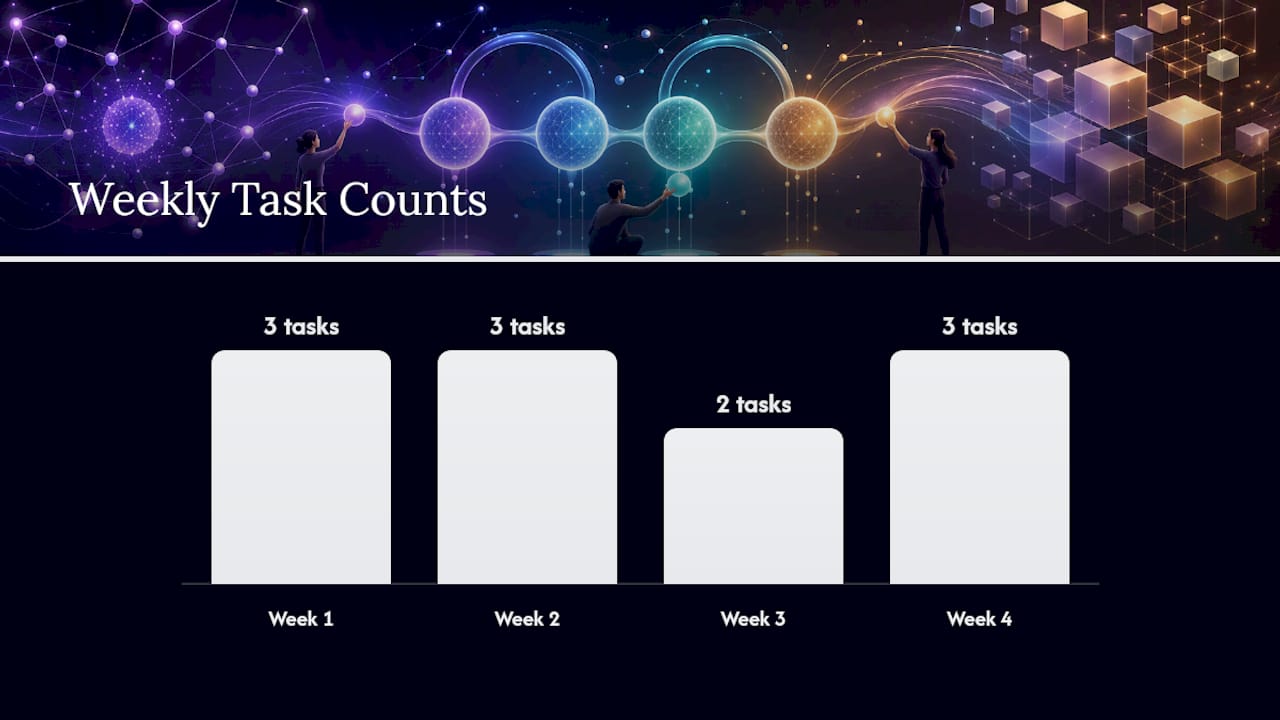
- Week 1: Audit and prioritize. Pull your ten highest-traffic or highest-intent pages and check each for crawler access (GPTBot, PerplexityBot, ClaudeBot, Google-Extended), existing schema, and whether a clean answer capsule exists in the first 200 words. Score each page pass or fail on those three criteria.
- Week 2: Rebuild capsules and schema. Rewrite the opening paragraph on every failing page into a 40 to 60 word answer capsule, add or fix Article and FAQPage schema, and validate every JSON-LD block. This is also the week to draft two or three FAQ question-and-answer pairs per page if none exist.
- Week 3: Publish original data and start outreach. If you have any proprietary number (a conversion rate, a case study result, a client outcome), turn it into its own citable statement and pitch it to one or two relevant trade publications or niche blogs. No original data yet? Use this week to run a small survey, poll, or internal data pull worth publishing.
- Week 4: Monitor and expand. Run your prompt tests across ChatGPT, Perplexity, and Google’s AI Overview for your priority pages. Log results, check referral traffic, and identify which pages need a second pass on either capsule wording or corroboration.
A few acceptance minimums keep this from becoming busywork: every capsule should be quotable on its own, every schema block should pass validation without errors, and every outreach pitch should center on a specific number, not a general company mention.
Pro Tip: Templatize the capsule format once you get it right on one page. A repeatable two-sentence structure, claim plus supporting fact, applied across twenty pages beats a perfect capsule on just one.
Small teams should focus weeks one and two almost entirely on their three or four highest-value pages rather than spreading thin across the whole site. Agencies managing multiple client accounts can scale this by building the audit criteria into a standing checklist and running weeks one and two as a fixed onboarding step for every new engagement, then treating weeks three and four as ongoing monthly cycles rather than a one-time sprint.
A Practitioner’s Note on Making This Operational
Most GEO advice stops at “add schema and write good content,” which is true but not actionable. Courimo treats this as a rewrite priority on existing content, not just a rule for new pages, since a five-year-old blog post with a buried answer often just needs its opening paragraph restructured to start earning citations.
Original data placement follows the same logic. A single proprietary statistic, pitched to the right niche publication, does more for citation odds than a month of generic content production. That’s a resourcing argument as much as a tactical one: budget for data collection and PR outreach, not just word count.
For teams building AI-facing SEO workflows more broadly, AmmarAI’s guide to using AI for SEO covers adjacent workflow practices worth pairing with the placement tactics here.
— Ruthwik
Get Your Citation-Ready Content Built Right
Building answer capsules, fixing schema, and running outreach across ten pages takes real hours most in-house marketing teams don’t have free. Courimo runs this as a structured engagement: a content audit against the crawler, schema, and capsule criteria above, a rewrite pass on your priority pages, and outreach to place your original data in front of the right trade publications.
The process starts with a scoped SEO quote so you know exactly what gets rebuilt and when. Most engagements run in phases, technical fixes first, then content restructuring, then outreach, so you see incremental progress rather than waiting months for one big reveal. If your site is already ranking but showing up nowhere in ChatGPT or Perplexity answers, that gap is usually fixable within a single quarter. Request your audit and get a clear breakdown of which pages are already close to citation-ready and which need a full rebuild.
Sources
For hands-on implementation, validate structured data against schema.org’s Article documentation before publishing anything new. The 100-page AI Overview citation study remains the most detailed public breakdown of where in a page citations actually originate. For platform-specific tactics, the ChatGPT citation audit and the 8,000-citation Search Engine Land analysis both offer data worth revisiting as engines continue to shift their sourcing behavior.
- Where Google AI Overviews Cite From: A 100-Page Study
- How to get cited by AI: SEO insights from 8,000 AI citations
- How to Get Cited by ChatGPT: 6 Levers That Actually Work | Is My Brand in AI
- Schema
FAQ
Can I Use AI to Generate Citations?
AI tools can help draft content, but the citations themselves need to point to real, verifiable sources; never let an AI tool invent a statistic or a source that doesn’t exist, since that fabricated claim will fail verification if another engine tries to corroborate it.
How Do You Cite Content That AI Generated?
Treat AI-generated text the way you’d treat any unsourced draft: verify every factual claim against a primary source before publishing, and cite that primary source directly rather than citing the AI tool as the origin of the fact.
Which AI Platform Is Best for Getting Cited?
There’s no single best platform, since ChatGPT, Perplexity, and Google’s AI Overviews each weight signals differently; building an answer capsule, adding schema, and earning third-party corroboration improves your odds across all of them, which is an approach applied when structuring AI search optimization work.
Can You Use AI Content If You Disclose It?
Yes. Disclosing AI involvement in drafting doesn’t disqualify a page from being cited, but the underlying facts still need independent verification; engines are checking whether a claim holds up against other sources, not who or what typed the first draft.
Why Do AI Citations Matter for SEO?
AI citations put your brand directly inside the answer a user reads, often without a click, which means visibility now depends on being the verified source behind an answer rather than just the top blue link, a shift that referral traffic and branded search data are starting to confirm.